

Introduction
When it comes to enjoying sunny days, most of us are aware of the need to protect our skin from harmful ultraviolet (UV) rays. But how do you know when the sun is truly dangerous? That’s where the UV index comes into play. This helpful tool guides us to make smarter decisions about sun safety, ensuring we minimize the risk of sunburn, skin damage, and long-term health issues like skin cancer. In this guide, we'll dive into what the UV index is, where to find it, what the numbers mean, and how this knowledge can help you choose the right sun protection strategies, including the best sunscreens like broad-spectrum mineral options such as 3rd Rock Sunblock Sunscreen Lotion.
What is the UV Index?
The UV index is a standardized measure of UV radiation from the sun at a particular place and time. It was developed by environmental and health agencies to give people a clear understanding of the UV strength in their area. Basically, it quantifies the potential risk of skin damage caused by UV rays, helping us gauge how strong the sun's rays are and how careful we need to be.
Where Can You Find the UV Index?
Fortunately, you don’t have to guess about the UV index — it’s widely available! You can find the UV index forecast on weather websites (like UVDrop), weather apps on your smartphone, or local news reports. Many weather stations and outdoor apps display the UV index prominently alongside other forecast details. Some public health agencies and environmental organizations also provide daily UV index updates.
Understanding the UV Index Scale
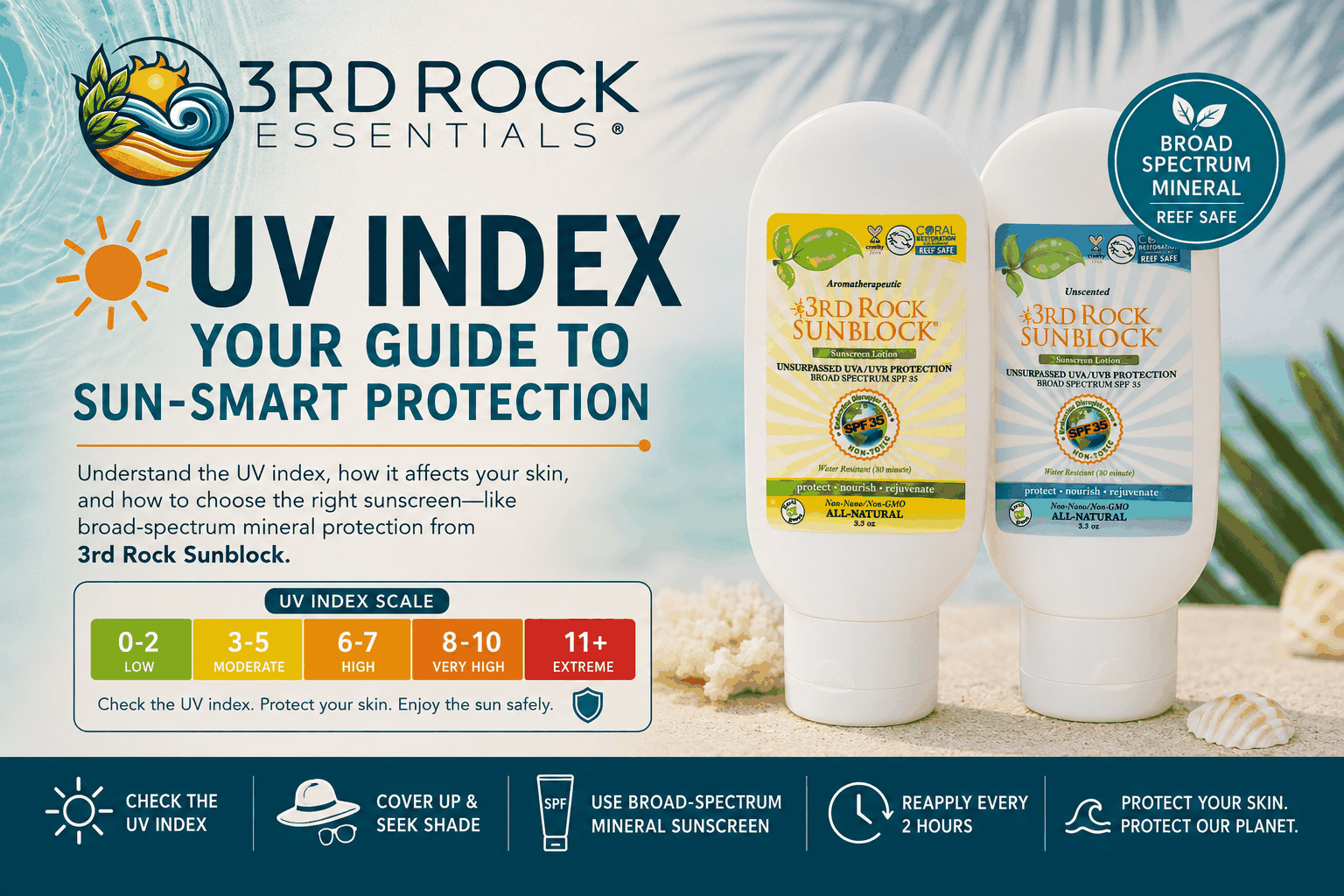
The UV index scale generally ranges from 0 to 11+, with higher numbers indicating greater risk:
- 0-2 (Low): Minimal protection needed. It's safe to be outdoors with minimal sun protection.
- 3-5 (Moderate): Protective measures are recommended, like wearing a hat and sunglasses.
- 6-7 (High): Be extra cautious! Seek shade during peak sunlight hours and wear protective clothing and sunscreen.
- 8-10 (Very High): Take significant precautions. Limit time in the sun, especially between 10 a.m. and 4 p.m.
- 11+ (Extreme): Maximal protection required. Minimize sun exposure as much as possible.
What Does the UV Index Tell You?
The primary purpose of the UV index is to inform you about the level of UV radiation and the associated risks. For example, a UV index of 2 suggests low UV exposure, meaning you can enjoy outdoor activities with minimal sun protection. Conversely, a UV index of 9 or above indicates very high or extreme risk, requiring strict sun safety practices.
Knowing the UV index helps you decide:
- When to seek shade
- What clothing to wear
- When and how to apply sunscreen
What Does the UV Index Mean for Sunscreen Use?
Sunscreen is a critical tool for protecting your skin from UV damage, but not all sunscreens are created equal. The UV index helps you determine the level of protection you need at any given moment. On days with a high UV index, a broad-spectrum, high-SPF sunscreen becomes essential.
For instance, if the forecast indicates a UV index of 8, you should opt for a sunscreen that offers at least SPF 30, and ensure it provides broad-spectrum protection to block both UVA and UVB rays. Reapplication every two hours, or more often if swimming or sweating, is also recommended.
How Does the UV Index Influence Your Sunscreen Choices?
Knowing the UV index makes your sunscreen choices more strategic. On days with low UV index, you might get away with a lighter sunscreen, or simply rely on protective clothing. But during high or extreme UV index days, using a high-quality broad-spectrum mineral-based sunscreen like 3rd Rock Sunblock is your best bet.
Mineral sunscreens, which contain zinc oxide or titanium dioxide, work by reflecting and scattering UV rays, rather than absorbing them like chemical sunscreens. They provide broad-spectrum protection from UVA and UVB rays, are often less irritating, and start working immediately upon application — perfect for high-risk days.
Why Choose Broad-Spectrum Mineral-Based Sunscreens?
In the world of sun protection, broad-spectrum mineral sunscreens like 3rd Rock Sunblock stand out as some of the best options. Here’s why:
- Complete UVA and UVB protection: They shield your skin from both damaging UVA rays that cause premature aging and UVB rays responsible for sunburn.
- Immediate protection: Unlike chemical sunscreens, they start working instantly upon application.
- Less irritating: They are generally gentler, making them suitable for sensitive skin.
- Environmental benefits: Mineral sunscreens are often reef-safe and less likely to cause coral damage.
Among options, 3rd Rock Sunblock is renowned for its high mineral content, skin-friendly formula, and broad-spectrum coverage, making it an excellent choice for everyday use, especially on days with high UV index.
Putting It All Together: Practical Tips for Sun Safety
- Check the UV index before heading outdoors — plan your activities accordingly.
- Wear protective clothing, hats, and sunglasses, especially on high UV days.
- Apply a broad-spectrum mineral sunscreen like 3rd Rock Sunblock generously — don’t forget ears, neck, and hands.
- Reapply sunscreen every two hours or immediately after sweating, swimming, or towel drying.
- Seek shade during peak sunlight hours (10 a.m. to 4 p.m.).
- Stay informed! Follow local weather reports and UV index updates regularly.
Final Thoughts
The UV index is a simple yet powerful tool that empowers you to protect your skin effectively. By understanding what it means and how to respond, you can enjoy the sunshine responsibly. Remember, choosing the right sunscreen — like EPA-friendly, broad-spectrum mineral options such as 3rd Rock Sunblock — makes a significant difference in your sun safety routine. So next time you plan an outdoor adventure, check that UV index, and take proactive steps to stay safe and sun-smart!


